DreamAI Bedtime Stories: Personalized Calm Adventures

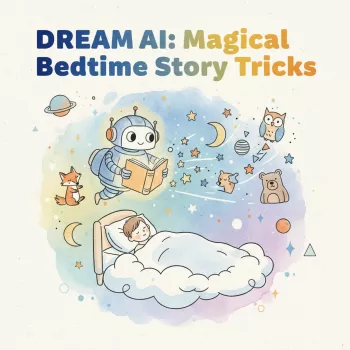
DreamAI: Magical Bedtime Story Tricks for Personalized Adventures and Creative Family Moments
Personalized bedtime stories can turn the end of the day into a calm, connecting ritual—especially when the story naturally includes a child’s favorite characters, places, and feelings from the day. DreamAI: Magical Bedtime Story Tricks focuses on simple, repeatable ways to shape AI-generated stories into warm, age-appropriate adventures that feel uniquely “theirs,” while keeping the routine soothing for the whole family.
A consistent wind-down matters. The American Academy of Pediatrics shares practical guidance on building healthy sleep habits, and a steady bedtime routine is a core part of helping kids settle more easily (HealthyChildren.org).
What makes AI bedtime stories feel truly personal
The most comforting “personalized” stories don’t need dramatic twists. They need familiarity, gentle momentum, and a few details that make your child feel noticed.
- Use real-life details: a pet’s name, a favorite stuffed animal, a classroom theme, or a recent small win (sharing, trying new food, learning a skill).
- Keep the emotional tone steady: cozy setting, gentle stakes, clear reassurance, and a satisfying resolution.
- Limit new concepts at night: one new idea per story works better than a cascade of surprises.
- Repeat comforting motifs: a familiar “safe place,” a recurring helper character, and a predictable closing scene.
- Match attention span: short scenes for toddlers, longer arcs for older kids.
Quick bedtime story recipe templates
| Story goal | Add these ingredients | Example setup line |
|---|---|---|
| Calm down after a busy day | Soft setting, slow pace, bedtime sensory cues (warm blanket, nightlight), reassuring narrator | “Tonight, the moonlight laid a silver path across the hallway rug, guiding you and Bunny to the Quiet Cloud Garden.” |
| Build confidence | Small challenge, helpful mentor, child succeeds with one clear skill, celebration | “In the tiny village of Shoelace Hills, you discovered a knot that only brave beginners can learn.” |
| Process big feelings | Name the feeling, gentle metaphor, choice-based coping, supportive caregiver figure | “Worry was a little backpack you didn’t mean to carry, but together we could unpack it—one pebble at a time.” |
| Encourage kindness | Friendship moment, simple moral, concrete kind action, warm ending | “When the shy star forgot how to sparkle, you showed it a small kindness that changed the whole sky.” |
A simple setup that keeps bedtime smooth
When kids ask for “one more thing,” they’re often asking for predictability. A light framework keeps the story magical without turning bedtime into a negotiation.
- Pick one consistent length (5, 8, or 12 minutes) so the finish line is always clear.
- Choose a stable cast: your child as the hero, one sidekick, one gentle guide, and one “problem” that is never scary.
- Set boundaries upfront: no chasing villains, no disasters, no intense suspense, and no cliffhangers at bedtime.
- Create a reusable “story card” list: names, favorite themes, preferred endings, and calming phrases.
- Keep the close the same: story → one reflection question → lights out.
For families who like something tangible, a simple desktop holder can keep your story cards, a pen, and a small notebook in one place. The Metal Pen & Pencil Organizer – Rose Gold & Gold Desktop Holder for Office & Home works well as a dedicated “bedtime basket” on a shelf outside the bedroom.
Magical bedtime story tricks that elevate AI stories
- The “three gentle beats” structure: (1) cozy start, (2) small problem, (3) warm resolution with a bedtime wind-down scene.
- The “sensory ladder” for relaxation: begin with light details (a soft lamp), then layer quieter cues (slow footsteps, cozy textures) as the story progresses.
- The “callback charm”: bring back one detail from earlier in the day so your child feels seen (a new word learned, a playground moment, a brave try).
- The “choice moment” trick: offer one simple choice mid-story (“forest path or river path?”) to boost engagement without extending bedtime.
- The “gratitude lantern” ending: close with one thankful thought and one hopeful thought for tomorrow.
When using AI tools with kids, it helps to keep a parent’s perspective on privacy and appropriateness. Common Sense Media’s resources can be a useful reference point for families navigating AI in everyday life (Parents’ guide to AI).
Personalization by age: toddlers, preschoolers, and early readers
Keeping stories safe, kind, and family-appropriate
For a deeper look at children’s online privacy expectations, the FTC’s COPPA guidance is a solid starting point (Protecting Children’s Privacy Online).
Turning bedtime stories into creative family moments
Common hiccups and quick fixes
DreamAI: what the guide helps families do
DreamAI: Magical Bedtime Story Tricks is designed to make nightly storytelling easier to repeat and easier to enjoy—without reinventing the wheel when you’re tired.
If you’re creating a cozy storytelling corner in a shared family space, the Metal Pen & Pencil Organizer can help keep your story notes in one place, and the 6-Pack Silicone Baby Safety Socket Covers – European Outlet Childproof Guards is a practical add-on for childproofing nearby outlets in play-and-read areas.
FAQ
How long should an AI bedtime story be for a calm wind-down?
For toddlers, aim for about 3–5 minutes; for preschoolers, 5–10 minutes; and for early readers, 8–15 minutes. The biggest helper is consistency—ending with the same calm “sleepy landing” each night.
How can a story be personalized without sharing sensitive information?
Use non-identifying details like a favorite animal, color, hobby, or a made-up nickname, and fictionalize places (for example, “your school” rather than its name). Avoid full names, addresses, schedules, and other details that could identify a child.
What should be avoided in bedtime stories for sensitive sleepers?
Avoid chasing, separation themes, monsters, disasters, and cliffhangers. Gentler conflicts—like a lost item, a misunderstanding, or helping a friend—keep the story soothing while still feeling meaningful.









Leave a comment