Two Kids, Two Schedules: A Simple Daily Routine System

Managing Two Kids on Different Schedules: A Calm, Repeatable Routine for Busy Families
Two children with mismatched nap times, school pickups, activities, and bedtime needs can make every day feel like a moving target. The goal isn’t to force everyone into one perfect timetable—it’s to create a system that stays steady even when the clock shifts. With a few anchors, two “tracks,” and smoother transitions, it’s possible to protect rest time, reduce sibling friction, and keep meals and chores from swallowing the day.
Start With the Non‑Negotiables (Then Build Around Them)
Before tweaking nap schedules or reorganizing evenings, map the pieces that truly don’t move. Start with fixed commitments for each child: school/daycare hours, therapies, practices, recurring appointments, plus realistic commute and parking time. Then add biological anchors—typical wake windows, nap needs by age, and a bedtime range you can actually maintain. For helpful baselines, the American Academy of Pediatrics’ sleep guidance is a solid reference: HealthyChildren.org — Sleep.
Next, include adult constraints: work blocks, meetings, and the minimum downtime needed to avoid burnout. Finally, choose a “family core window” each weekday for connection—dinner together, a shared walk, or bedtime stories—so everyone has one predictable overlap even when the rest of the day differs.
Create Two Tracks: Individual Needs + Shared Rhythm
Think of your day as two parallel tracks that occasionally merge. Each child gets their own track (wake, meals/snacks, school/activities, quiet time/nap, bedtime steps), while the household follows a shared rhythm where it can: a common snack time, one daily reset, and one family moment.
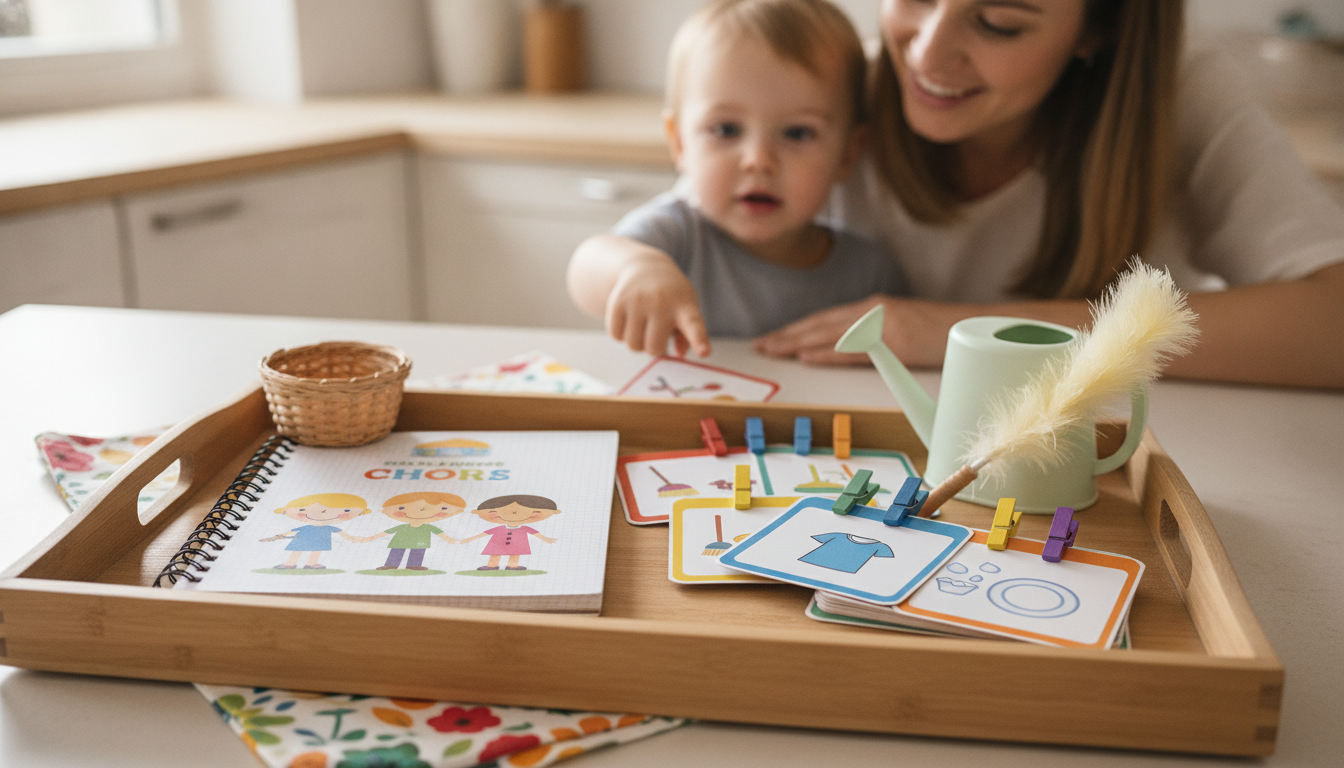
The glue is the handoff ritual—small routines that tell the non-focused child what to do when you’re helping a sibling. A consistent “independent play bin,” audiobooks, or simple jobs (sorting socks, wiping the table) reduce interruptions and resentment. Aim for consistency in sequence, not exact time: snack → outside → bath → story. This supports self-regulation and lowers transition meltdowns as days shift; Harvard’s work on executive function explains why predictable routines help kids practice control and flexibility: Harvard Center on the Developing Child — Executive Function & Self-Regulation.
Ways to Coordinate Two Different Schedules
| Approach | Best for | How it works | Watch out for |
|---|---|---|---|
| Staggered routines | Baby/toddler + school-aged | One child naps while the other gets 1:1 time or homework help | Protect quiet time so it doesn’t become chores-only |
| Family core blocks | All ages | Everyone aligns for one anchor block (e.g., dinner + bedtime wind-down) | Over-scheduling the core block can backfire |
| Rotating parent focus | Two caregivers or supportive partner | Alternate which child gets primary attention during key transitions | Requires clear communication to avoid gaps |
| Quiet-time overlap | Preschool + early elementary | Older child has reading/quiet activities while younger naps | Quiet-time expectations need training and a backup plan |
Design Smooth Transitions (The Biggest Stress Multiplier)
Even a great plan falls apart at transition points: leaving the house, switching caregivers, starting homework, or beginning bedtime. Build predictable cues: a two-minute warning, a simple timer, and one consistent phrase (“Two minutes, then shoes.”). Pair that with “grab-and-go” stations—backpacks, shoes, snack bin, water bottles, and weather gear in one place.
Add micro-buffers: 10–15 minutes before departures and before bedtime. Those buffers turn “late again” into “still okay,” and they reduce the urge to rush kids (which often creates more resistance). For mornings, choose low-friction clothing: capsule outfits, labeled bins, and fewer choices. Decision fatigue is real—especially when two children need different things at the same time.
Protect Sleep When Bedtimes Don’t Match
Meals and Snacks Without Living in the Kitchen
If bottles are still part of your routine, a clear, repeatable method helps reduce mistakes and stress on busy days. The Mixing Baby Bottles Safely and Easily (step-by-step eBook) can be a handy reference when caregivers rotate or when you’re prepping ahead.
Reduce Sibling Conflict When One Child Gets “More Time”
Visible tokens also help: a simple chart showing whose “special time” is next reduces bargaining and repeated questions. Reframe overlap moments as “team time” with cooperative tasks: set the table together, pick dinner music together, race to match socks. For more ideas on positive routines and expectations, the CDC’s parenting resources are practical and grounded: CDC — Positive Parenting Tips.
For safety in mixed-age households—especially when the older child has small items or the younger child is newly mobile—simple childproofing reduces constant “no/no/no.” The 6-Pack Silicone Baby Safety Socket Covers (childproof guards) can help create safer “yes spaces” while you’re managing two tracks.
A Weekly Planning Loop That Takes 15 Minutes
If you want a ready-to-use framework you can share with anyone who helps with childcare, consider the Managing Two Kids on Different Schedules Guide (digital resource), which keeps routines, checklists, and contingency plans in one place.
Digital Support That Keeps Everything in One Place
Common Problems and Fast Fixes
FAQ
How can two kids have different bedtimes without constant disruption?
Keep the bedtime steps consistent for both kids, create a quiet zone for the child who’s sleeping (white noise helps), and give the other child a structured low-noise activity kit so they know exactly what to do.
What’s a realistic way to plan when schedules change every week?
Use a 15-minute weekly loop: map non-negotiables, protect a family core block, choose two easy days, and decide simple if-then backups for late practices, missed naps, or sick days.
How do you prevent jealousy when one child needs more attention?
Build small, predictable 1:1 time rotations, explain the fairness plan in simple language, and use a visible chart so each child can see when their turn is coming.










Leave a comment