Discipline Without Yelling: 10-Step Calm Parenting Checklist

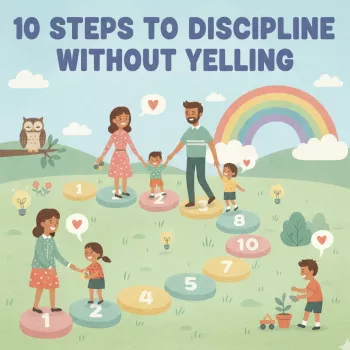
10 Steps to Discipline Without Yelling: A Calm, Consistent Checklist for Everyday Parenting
Yelling often shows up when stress is high and options feel limited. Calm discipline is not permissive—it’s clear, steady leadership that protects connection while teaching skills. The steps below work best when used as a repeatable routine: regulate first, state the limit, offer a better choice, and follow through with predictable outcomes.
What Calm Discipline Looks Like (and What It Isn’t)
Calm discipline is firm limits delivered with a regulated tone, followed by consistent action. The boundary stays the same; the volume changes.
- Calm discipline: clear expectations, brief language, and follow-through you can repeat.
- Not permissive: limits still exist; the difference is how they’re communicated and enforced.
- Not “perfectly calm”: the goal is recovery—reset quickly and return to respectful leadership.
- A simple test: the child understands the rule, the next step, and how to repair—without fear.
For a deeper look at how effective discipline supports healthy development, the American Academy of Pediatrics emphasizes teaching and guiding over harsh punishment, especially when kids are still learning self-control.
Set Up for Success Before Problems Start
Many “discipline” moments are actually prevention moments that came a little too late. Setting the stage reduces power struggles before they ignite.
- Clarify 3–5 non-negotiable house rules stated positively (example: “Hands are for helping”).
- Create predictable routines for common flashpoints: mornings, meals, transitions, bedtime.
- Use environment design: snacks and water available, clutter reduced, tempting items put away.
- Practice expectations when calm: role-play “asking for a turn,” “stopping,” and “waiting.”
- Choose a short phrase per rule so it’s easy to repeat under stress (your “family script”).
If you want something simple to keep on the fridge or your phone, the 10 Steps to Discipline Without Yelling Checklist | Positive Parenting Guide to Calm & Effective Discipline is a quick-reference tool that helps caregivers stay aligned on the same responses.
The 10-Step No-Yelling Discipline Routine
Think of this as a “calm ladder” you climb in real time. You won’t use every step in every situation, but keeping the sequence in mind makes it easier to stay steady.
10 steps at a glance: what to say and what to do
| Step | What to say (sample script) | What to do (follow-through) |
|---|---|---|
| Pause | “I’m going to take a breath.” | Two slow breaths; relax shoulders; soften face. |
| Get close | “I’m here.” | Move within arm’s reach; gentle posture; eye level. |
| Name it | “You’re mad you can’t have it.” | Reflect feelings; keep voice low and steady. |
| State limit | “I won’t let you throw.” | Block/hold object; position body to stop behavior. |
| Alternative | “You can throw this ball outside.” | Offer safe option; hand it over if possible. |
| Choice | “Shoes on now or in 2 minutes—your choice.” | Start timer; point to next step; avoid lecturing. |
| Follow through | “I’ll help your body.” | Assist gently; carry/guide as needed; minimal words. |
| Consequence | “Markers are for paper; they go away for today.” | Remove item; store out of reach; stay calm. |
| Repair | “Let’s try again—show me gentle hands.” | Reconnect; practice; offer specific praise for effort. |
| Reset plan | “Next time we’ll do a snack before homework.” | Adjust routine; teach skill during calm time. |
Scripts That Keep the Boundary Without Power Struggles
When you’re consistent, you can lean more on positive reinforcement—not as a bribe, but as a way to strengthen the skills you want to see again (like trying again with a calmer voice).
Consequences That Teach (Not Punish)
For toddlers and preschoolers, the CDC’s Essentials for Parenting highlights clear expectations, predictable routines, and calm follow-through as building blocks for behavior and emotional regulation.
When Yelling Feels Inevitable: A Rapid De-Escalation Plan
Practical supports help, too. For example, reducing hazards lowers your baseline stress during conflict moments; 6-Pack Silicone Baby Safety Socket Covers – European Outlet Childproof Guards can make childproofing feel more manageable so you’re not constantly on edge.
Printable Checklist for Consistency on Hard Days
If parenting routines are shifting because you’re also caring for an infant, simplifying other tasks can protect your patience. Mixing Baby Bottles Safely and Easily | Step-by-Step Formula Mixing eBook for New Parents is a helpful reference for streamlining bottle prep so one more daily stressor doesn’t spill into discipline moments.
FAQ
What if a child ignores calm instructions unless someone yells?
Reduce repeating and increase follow-through: get close, state the limit once, offer a simple choice, then act calmly. Over time, consistent action teaches that calm words “count,” and practice during calm moments makes the expectation easier to follow.
How long should consequences last for preschoolers and young kids?
Keep consequences brief and closely connected to the behavior—often minutes to the rest of the day is enough. The goal is learning and re-entry into success, not extended discomfort.
What should happen after a meltdown to prevent the next one?
Repair first (comfort and safety), then teach one small skill the child can use next time—like the exact words to ask for help. Finally, adjust the likely trigger (snack, earlier transition warning, fewer demands) and practice the skill later when everyone is calm.







Leave a comment