Daily Toddler Speech Checklist for Easy Language Wins
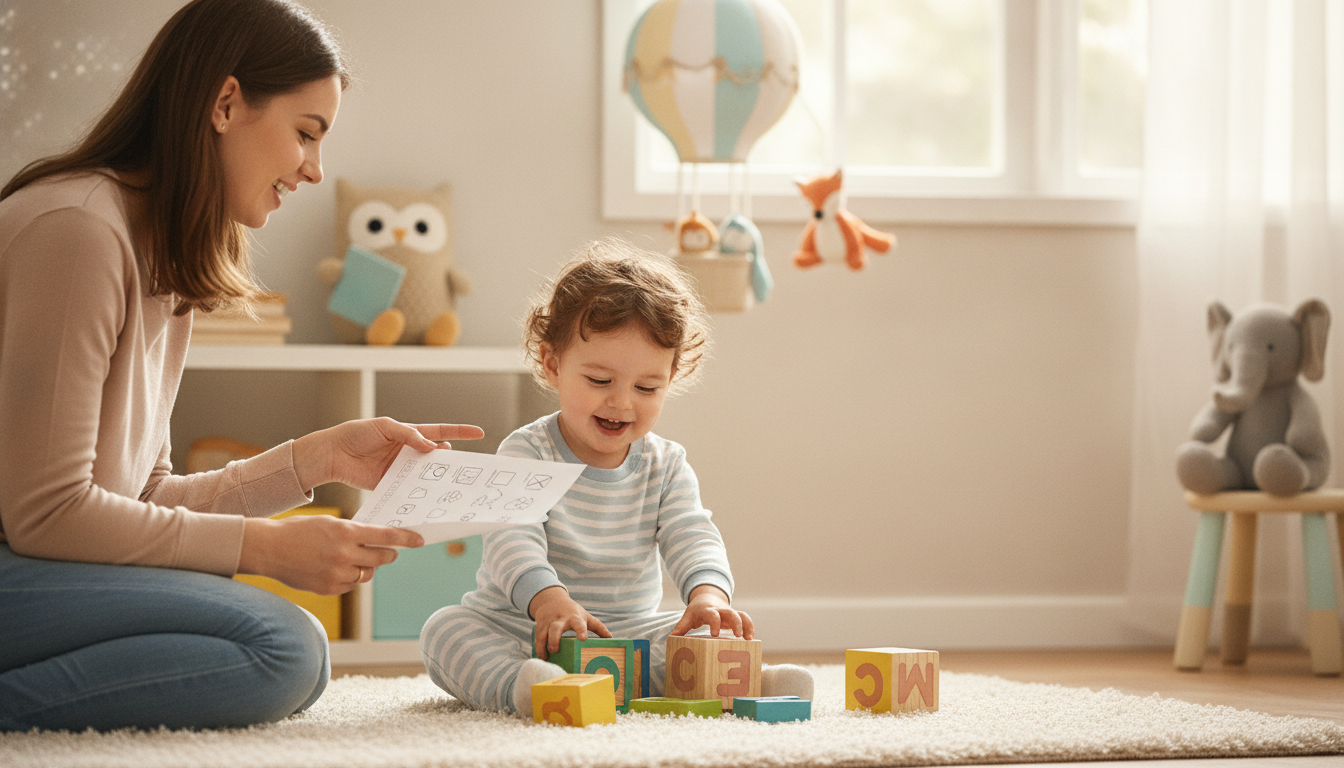
Toddler Speech Boosting Checklist: A Simple Daily Plan for Stronger Early Language Skills
Toddlers learn to talk through everyday moments—mealtimes, play, bath, and bedtime. A practical checklist helps turn those moments into consistent language practice without turning home into a clinic. Below is a clear, routine-based approach that supports speech and language growth with quick activities, parent-friendly prompts, and gentle ways to track progress.
What “speech and language” includes in the toddler years
In the toddler stage, “talking” is really a bundle of skills that grow together. Knowing what you’re supporting makes progress easier to spot.
- Speech: how sounds are made and understood (clarity, sound patterns, being understood by others).
- Language: the words used and understood (vocabulary, combining words, following directions, using language socially).
- Communication: gestures, eye contact, turn-taking, and using sounds/words to get needs met.
- Progress can look like more attempts, more back-and-forth, and better understanding—not only “new words.”
For a helpful overview of typical communication development, see the American Speech-Language-Hearing Association (ASHA) milestones and the CDC developmental milestones.
Why a checklist approach works for busy families
- Consistency beats intensity: 5–10 minutes repeated daily often helps more than an occasional long session.
- Less decision fatigue: a short menu of activities prevents guessing what to do next.
- Easier follow-through: tying prompts to routines (snack, diaper changes, car rides) makes practice feel automatic.
- Better tracking: quick checkboxes highlight what is improving and what needs more repetition.
If you like having everything in one place, the Toddler Speech Boosting Checklist (printable digital download) is designed for short routine “wins” and simple weekly tracking.
Daily routine speech boosters (copy-and-use plan)
Think of these as tiny, repeatable language moments you can sprinkle through the day. The goal is connection and repetition—not perfect pronunciation.
Morning
Narrate actions with short, clear phrases: “Shoes on. Zip up. Go!” Then pause to invite a sound, gesture, or word attempt. Your pause is the “turn” that makes it a conversation.
Meals
Offer choices: “Milk or water?” Model the word, then wait 3–5 seconds. If your toddler points or grunts, treat it as communication and respond: “Water! Here’s water.”
Play
Follow your toddler’s lead. Repeat what they say and add one step: “Car” → “Fast car.” If they say nothing, you can still model: “Up… up… car up!” while matching the action.
Out and about
Point, label, and connect: “Dog. Big dog. Dog is barking!” Keeping it simple beats long explanations, especially when your child is busy processing the world.
Books
Use fewer words with more repetition. Ask easy questions: “Where’s the cat?” Celebrate pointing, page-turning, sounds, and “almost” words.
Bedtime
Review the day with simple sequencing: “Park, bath, bed.” A predictable routine makes it easier for toddlers to participate with a sound or a familiar word.
| Routine moment | What to do | Example prompt | What counts as success |
|---|---|---|---|
| Snack | Offer a choice and wait | “Banana or cracker?” | Looks, points, signs, sound, or word attempt |
| Play | Copy + add one word | Child: “Truck.” Adult: “Big truck.” | Child repeats, tries new word, or stays engaged |
| Bath | Predictable phrase + pause | “Ready, set…” (pause) | Child fills in with sound/word or anticipates with smile/gesture |
| Book time | Point and label 3 key words | “Ball. Dog. Up.” | Child points, vocalizes, or attempts any target word |
Parent techniques that boost talking (without pressure)
- Follow the child’s focus: talk about what they’re already watching or doing to increase engagement.
- Model, don’t demand: use the word naturally instead of repeated “Say ___.”
- Wait time: ask once, then pause; many toddlers need extra seconds to process and respond.
- Expand and recast: repeat the child’s attempt correctly and add one small step (“Wa-wa” → “Water. Cold water.”).
- Use “one-up” language: if the toddler uses 1 word, model 2; if they use 2, model 3.
Want a simple setup so the checklist is always within reach? A desktop organizer can keep printed pages, a pen, and a highlighter handy: Metal Pen & Pencil Organizer – Rose Gold & Gold Desktop Holder for Office & Home.
Printable checklist: how to use it week by week
- Pick 3 daily moments to start (example: snack, play, book). Keep it small for the first week.
- Choose 5–10 target words that match your child’s world (foods, favorite toys, people, action words like “go,” “up,” “more”).
- Track attempts, not perfection: check off pointing, signing, approximations, and partial words.
- Rotate targets every 1–2 weeks: keep 2–3 “easy wins” while adding 1–2 new words.
- Share the checklist with other caregivers so prompts and expectations stay consistent.
For families who want a ready-made, print-and-go version, the Toddler Speech Boosting Checklist (printable digital download) keeps routine prompts, target words, and weekly check-ins in one place.
When to get extra help (and what to notice)
Hearing matters too—recurrent ear infections or suspected hearing issues are good reasons to request a hearing check. For parent-friendly guidance on language delays, visit HealthyChildren.org (AAP) on language delays.
A ready-to-print tool for daily practice
FAQ
How many minutes a day should a toddler practice speech activities?
Aim for short, frequent practice—about 5–10 minutes total spread across routines like snack, play, and book time. Consistency and warm back-and-forth matter more than long “drill” sessions.
What if a toddler won’t repeat words when asked?
Skip the pressure and model the word naturally while keeping it playful. Use wait time, offer simple choices, and count pointing, gestures, and “almost” words as real progress.
Which first words should be targeted for faster progress?
Pick highly motivating, functional words your toddler can use all day: people (Mama/Dada), favorite items, action words (go/up/open), and helper words (more/help). Choose words that come up many times daily so your child gets lots of natural practice.








Leave a comment