Flower Silicone Baby Teether: BPA-Free, Easy-Grip Relief
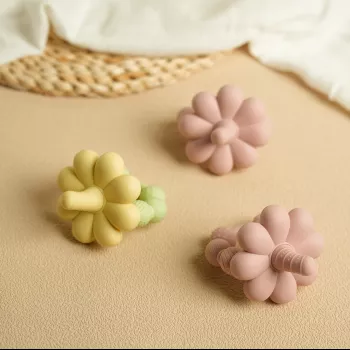
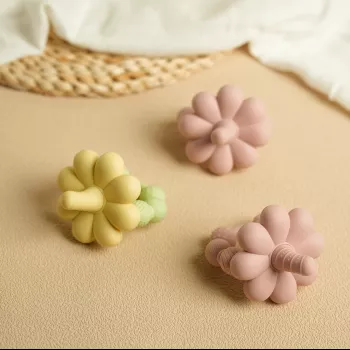
Flower-Shaped Baby Silicone Teether – BPA Free, Colorful & Safe
Teething can bring sore gums, drooling, and fussiness. A soft, easy-to-hold teether can offer gentle relief while supporting early grasping skills. This flower-shaped silicone teether is designed for everyday comfort with a bright, playful look and baby-safe materials—so it’s ready for quick soothing at home, on stroller walks, and during errands.
What makes a good teether for sore gums
Not all teethers feel the same to a baby. Comfort, grip, and easy cleaning matter just as much as the cute design. When choosing a teether for tender gums, prioritize:
- Soft-yet-firm texture: Something that can press against sore gum lines without feeling sharp or overly rigid.
- Easy grip for small hands: Shapes that support a palmar grasp and early hand-to-mouth coordination.
- Comfortable size: Large enough to handle safely while still easy to mouth and maneuver.
- Simple-to-clean surfaces: A design that washes thoroughly after drops, diaper-bag travel, or pocket storage.
- Baby-safe materials and clear care guidance: So daily use feels straightforward and dependable.
Material and safety basics (silicone and BPA-free)
Silicone is a popular teether material because it’s flexible, durable, and gentle on gums while still offering enough resistance to massage sore spots. Many parents also look for BPA-free baby items, especially for products that are mouthed often. The U.S. Food and Drug Administration provides background on BPA and its uses in food-contact applications (FDA — Bisphenol A (BPA)).
Beyond BPA-free labeling, a few practical checks can improve day-to-day safety and comfort:
- Smooth seams and consistent molding: Avoid rough edges that may irritate gums.
- One-piece designs when possible: Fewer parts can mean fewer places for moisture to collect.
- Use as intended and supervise: Especially as babies become more mobile and energetic.
For general teething guidance—like what’s normal and what’s not—the American Academy of Pediatrics offers helpful reference points (AAP — Teething).
Flower shape benefits: grip, reach, and sensory play
A flower shape isn’t just for looks. The petal contours can create a more “findable” chewing surface, and the rounded center can be easier for small hands to hold compared with flat, slippery teethers.
- Multiple chewing angles: Petal-like contours give different edges for front and side gums.
- Grip-friendly curves: A rounded center can support early self-soothing by making it easier to bring to the mouth.
- Bright colors: Visual engagement for baby, and easier spotting for parents on floors, in cup holders, or in a diaper bag.
- Varied pressure: Different thicknesses across the shape can offer changing pressure as teeth shift under the gums.
- Everyday convenience: A cheerful, simple item that’s easy to reach for during car rides or appointments.
Quick feature snapshot
This flower-shaped silicone teether is made for daily soothing with an easy-grasp design and a lightweight feel that travels well.
- Designed for teething phases, with a shape that supports easy grasping.
- Silicone construction aimed at gentle gum massage and comfortable chewing.
- BPA-free for frequent mouthing and everyday use.
- Colorful look that’s playful and easier to locate quickly.
- Compact and lightweight for diaper bags, strollers, and changing stations.
| Feature | Flower-shaped silicone teether | Typical hard plastic teether | Typical multi-part teether |
|---|---|---|---|
| Gum comfort | Soft, flexible pressure | Can feel firm on tender gums | Varies by material and parts |
| Grip for small hands | Curved/petal contours can help | May be slippery or flat | Often good, but depends on design |
| Cleaning ease | Usually straightforward to rinse and wash | Easy to wash, but can scratch over time | More crevices can trap moisture |
| Sensory variety | Multiple angles and textures from shape | Often uniform texture | May have multiple textures/features |
| Everyday portability | Lightweight, simple shape | Often lightweight | Can be bulkier |
How to use a teether safely and effectively
Timing and technique can make a teether more effective, especially during peak fussiness. Try these habits for smoother teething days:
Cleaning and care that fits real life
Teethers spend a lot of time on floors, in bags, and in tiny hands. A consistent cleaning routine helps keep them ready for the next round of chewing. For general germ-reduction guidance, the CDC shares helpful cleaning and sanitizing information (CDC — Cleaning and sanitizing).
When to offer other soothing options
Recommended add-ons for a safer, smoother routine
- Flower-Shaped Baby Silicone Teether – BPA Free, Colorful & Safe
- 6-Pack Silicone Baby Safety Socket Covers – European Outlet Childproof Guards
- Mixing Baby Bottles Safely and Easily (Formula Mixing eBook)
FAQ
Can a silicone teether go in the refrigerator or freezer?
Chilling in the refrigerator can be soothing if the product’s care instructions allow it. Avoid freezing solid if it makes the teether too hard, and always supervise use and inspect for damage before offering it.
How often should a baby teether be replaced?
Inspect teethers regularly and replace them if you notice cracks, tears, stickiness, discoloration, or a noticeable texture change. Babies who chew aggressively or have new teeth may wear down a teether faster, so replacement may be needed sooner.
Is BPA-free enough to consider a teether safe?
BPA-free is a good start, but safety also depends on overall material quality, a smooth finish without sharp edges, an age-appropriate size, and a cleaning routine that keeps it sanitary. Supervision during use and replacing worn teethers are also important for ongoing safety.










Leave a comment