Only Child to Big Sibling: Gentle Transition Tips
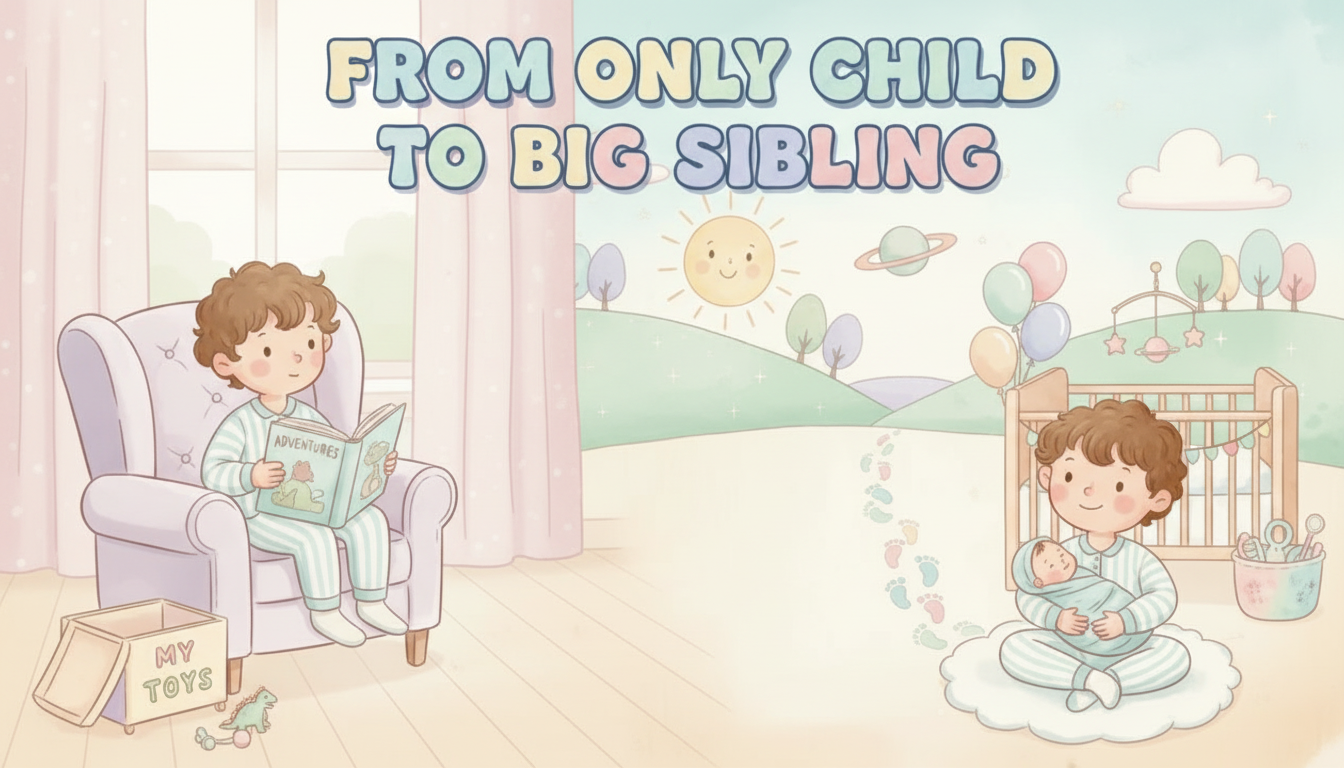
From Only Child to Big Sibling: A Gentle Transition Plan for Growing Families
A new baby can bring excitement and big feelings for an older child—pride, jealousy, curiosity, worry, and regressions that seem to come out of nowhere. With a gentle parenting approach, the goal is to protect the older child’s sense of security while building connection, competence, and belonging in a now-busier family rhythm. This guide lays out a practical, compassionate plan from pregnancy through the first weeks home, plus simple scripts and routines that reduce rivalry and strengthen sibling bonds.
What changes for an older child when a new baby arrives
Even when an older child seems thrilled, the family system shifts overnight. Understanding what’s underneath the behavior makes it easier to respond with calm limits and steady connection.
- Attention shifts: fewer uninterrupted moments and more “wait” messages can feel like rejection to a child who was previously the center.
- Identity shift: the child is learning a new role (big sibling) while still needing to feel “little” and cared for at times.
- Routine disruptions: sleep, meals, outings, and caregiver availability change; predictability becomes more important than ever.
- Mixed emotions are normal: love and jealousy can exist side-by-side; validating both reduces shame and acting-out.
- Common signs of stress: increased clinginess, tantrums, baby talk, toileting accidents, hitting/pushing, or refusing independence they previously managed.
Common reactions and gentle responses that protect connection
| Older child behavior | What it may be communicating | Gentle response to try |
|---|---|---|
| “I hate the baby” or “Send the baby back” | Fear of losing place in the family | Validate feelings: “This is a big change. You’re safe and loved.” Offer a special 10-minute connection block. |
| Regressing (baby talk, accidents, wanting to be carried) | Needing reassurance and closeness | Meet the need briefly without shame; add a “big kid” choice afterward: “Do you want the blue cup or green cup?” |
| Hitting/pushing near the baby | Overwhelm, jealousy, or seeking power | Block calmly: “I won’t let you hit.” Move baby to safety, coach alternative: “Squeeze a pillow; stomp feet.” |
| Refusing to help or refusing independence | Feeling replaced or controlled | Offer autonomy: “You can help in your way, or you can play nearby.” Praise effort, not compliance. |
| Acting out during feeds or diaper changes | Feeling least important at predictable times | Pre-load attention: invite a small job, set up a special basket, or start a shared ritual (song/story) before the task. |
Before the baby arrives: prepare without pressure
Preparation works best when it’s concrete and low-stakes. The goal isn’t to train your child to “love” the baby—it’s to make the coming changes feel understandable and survivable.
For additional age-based guidance on supportive discipline and connection, the American Academy of Pediatrics shares practical positive parenting tips that pair well with a gentle transition plan.
A gentle parenting toolkit: language that calms and connects
If you want a quick-reference version of scripts, routines, and “what to do during feeds/diapers/bedtime,” From Only Child to Big Sibling eBook (digital download) is built for real-life use on a phone when hands are full.
The first days home: small rituals that prevent rivalry
For a deeper look at what helps toddlers and preschoolers cooperate without harshness, the CDC’s Essentials for Parenting offers straightforward, research-informed strategies.
Helping the older child feel included (without making them responsible)
If feeding is part of your newborn plan, keeping preparation consistent can reduce chaos during peak-trigger moments. Mixing Baby Bottles Safely and Easily eBook can help streamline the routine so you have more attention available for your older child during transitions.
Handling tough moments: jealousy, aggression, and big feelings
As the baby becomes mobile, prevention matters too. Simple childproofing upgrades like silicone baby safety socket covers can reduce “constant no’s” in the home—helping everyone feel calmer while you’re juggling two children.
A practical guide for the transition: From Only Child to Big Sibling (digital download)
Some days you’ll have the patience to improvise; some days you’ll want a plan you can open one-handed. From Only Child to Big Sibling | eBook Guide on How to Help Older Child Adjust to New Baby is designed as a step-by-step reference for pregnancy prep and the first weeks postpartum, when consistency is hardest and most needed.
Who this guide supports best
| Family situation | Likely challenge | What to focus on |
|---|---|---|
| Toddler becoming a sibling | Big emotions, limited language | Simple scripts, predictable rituals, lots of co-regulation |
| Preschooler becoming a sibling | Power struggles and attention bids | Choices, involvement without pressure, “special time” consistency |
| Sensitive or anxious older child | Worry, clinginess, sleep changes | Extra reassurance, previewing routines, calm repair after ruptures |
| High-energy older child | Impulsivity near baby | Movement breaks, safe outlets, clear safety boundaries |
FAQ
How long does it take an older child to adjust to a new baby?
Many children show noticeable settling within a few weeks, but full adjustment often takes a few months. It’s common to see phases—an early “honeymoon,” then regressions, then stabilization—especially during illness, sleep loss, or schedule changes.
What if my older child acts aggressive toward the baby?
Prioritize safety by calmly blocking, separating, and supervising closely during predictable trigger moments like feeds and diaper changes. Validate feelings while holding firm limits, coach safer outlets, and seek professional support if aggression escalates or persists.
How can gentle parenting handle jealousy without rewarding bad behavior?
Separate feelings from actions: jealousy can be welcomed while hurtful behavior is stopped every time. Use proactive connection (planned attention) and specific acknowledgment of desired behaviors, then teach repair and coping skills when everyone is calm.










Leave a comment